Qutub Minar: The Tower That Rewrote Delhi's Skyline
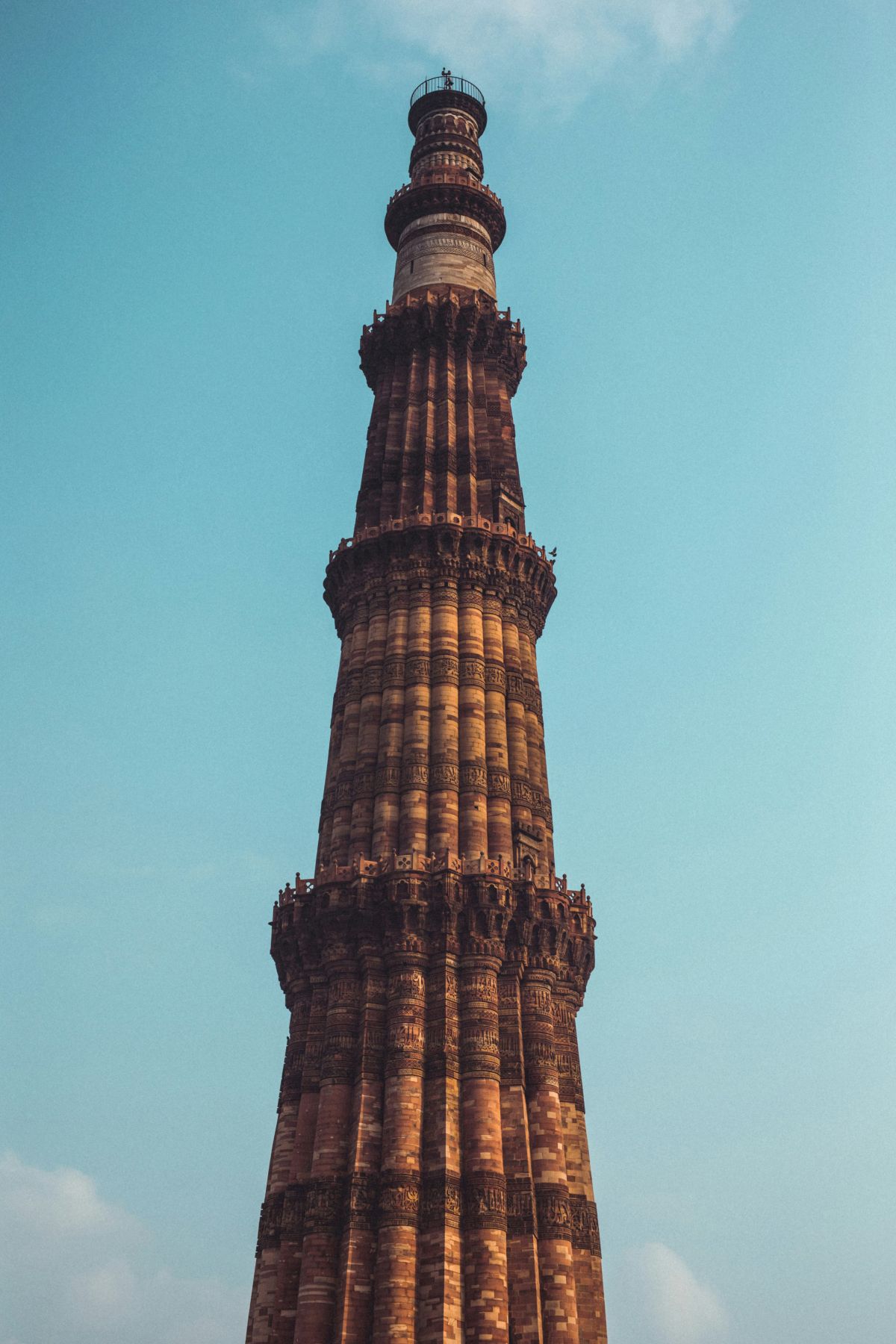
At 72.5 metres, the Qutub Minar is the tallest brick minaret in the world — and it has held that record for over eight centuries. Rising in five tapering storeys of red sandstone and marble from the Mehrauli district of South Delhi, it remains one of the most audacious feats of medieval engineering ever undertaken on Indian soil.
The Builder: Qutb ud-Din Aibak and the Delhi Sultanate
Construction began around 1193 CE, shortly after the defeat of Prithviraj Chauhan III. The tower was commissioned by Qutb ud-Din Aibak, founder of the Delhi Sultanate — the first Muslim dynasty to rule northern India. His son-in-law Iltutmish completed the upper storeys, adding a distinctly different style: lower storeys in red sandstone, upper storeys clad in marble.
The Iron Pillar: A 1,600-Year-Old Metallurgical Wonder
Standing in the centre of the mosque courtyard is a 7.2-metre iron pillar with a 4th-century Sanskrit inscription. This pillar has resisted corrosion for over 1,600 years — a fact that continues to astonish modern metallurgists. The secret lies in its unusually high phosphorus content, which created a protective layer on the surface. Medieval craftsmen achieved this without modern furnaces or laboratory control.
"The Iron Pillar is the most underrated wonder in Delhi. People walk right past it to photograph the Minar. But the pillar is 1,000 years older, and nobody in the world quite understands how they made it." — Mr. Sanjeev Kumar, GATGA Senior Guide
The Quwwat-ul-Islam Mosque
The first mosque to be built in Delhi after the Islamic conquest incorporates screens, pillars and carvings salvaged from 27 demolished Hindu and Jain temples — their original carved figures still visible in many columns. This is history in its most unfiltered form: the meeting point of two civilisations, preserved in stone.
Visiting the Qutub Complex
- Allow 2–3 hours for the full complex, including the mosque ruins, iron pillar and Alai Minar.
- Best visited in the early morning when the red sandstone glows warmly.
- The Mehrauli Archaeological Park adjacent contains dozens of additional Sultanate-era monuments.
The Qutub Minar is not merely a tall tower. It is the founding monument of a civilisation that would rule northern India for over three centuries. Every carved inscription on its surface is a chapter in a story that changed the course of Indian history.