Inside the Diwan-i-Khas: Shah Jahan's Hall of Private Audience
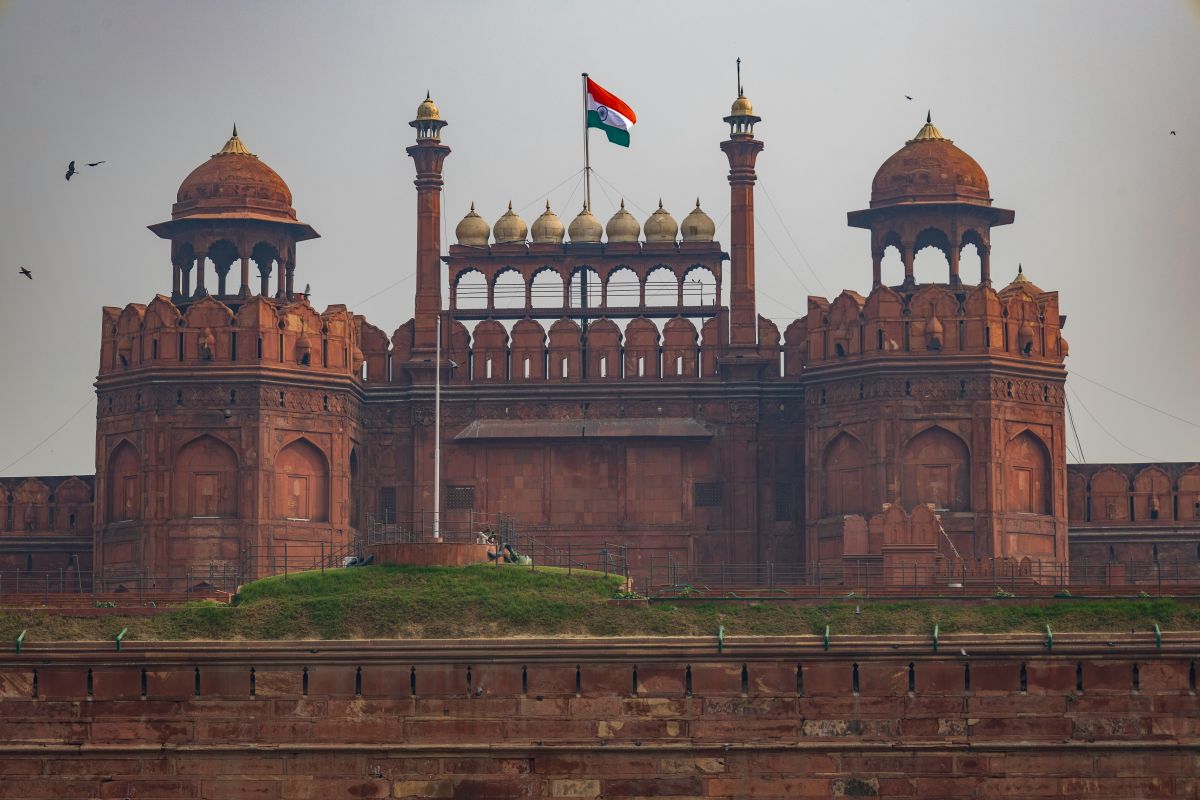
Inside the Red Fort complex, past the Diwan-i-Aam and the Rang Mahal, stands a small but extraordinary pavilion of white marble: the Diwan-i-Khas — the Hall of Private Audience. It is, in our guides' collective opinion, the single most historically charged room in Delhi — and possibly in all of India.
Above the northern and southern arches, carved in Persian script, runs one of the most quoted inscriptions in the history of architecture:
"Agar firdaus bar roo-e zameen ast, hami ast o hami ast o hami ast."
"If there be a paradise on earth, it is this, it is this, it is this."
The Peacock Throne: Delhi's Greatest Lost Treasure
The Diwan-i-Khas was built to house the Takht-e-Tavoos — the Peacock Throne. Completed in 1635, it was encrusted with diamonds, rubies, emeralds, pearls and sapphires, with two golden peacocks spreading their jewelled tails above it. The Koh-i-Noor diamond is believed to have adorned it.
In 1739, Nadir Shah sacked Delhi and carried the Peacock Throne back to Persia. It was never seen in India again. The marble plinth on which it stood is still there — bare, unadorned, and somehow more powerful for its emptiness. Our guides invite visitors to place their hands on it.
The Architecture of Power
The Diwan-i-Khas measures only about 27 by 20 metres, but every element was calculated to project imperial authority. The marble is inlaid with pietra dura floral work using the same semi-precious stones found in the Taj Mahal. The ceiling was originally silver, inlaid with gold — stripped away by the Marathas in the 18th century and by British forces after 1857.
After the Mughals: A History of Loss
The story of the Diwan-i-Khas after the fall of the Mughal Empire is a story of systematic plunder. The silver ceiling, the gold inlay, the jewelled treasures — all gone to various raiders across two centuries. What remains is the architecture — and it is enough.
To stand in the Diwan-i-Khas is to stand at the intersection of India's greatest imperial glory and its most devastating loss. With a GATGA guide, that intersection is worth an hour of your time.